

If you’ve ever heard a conversation surrounding pubic lice, chances are you’ve heard them being referred to as crabs. They are tiny insects that are found in your genital area, typically making their home and laying eggs in pubic hair. Contrary to popular belief, they are different to head lice, who nestle in your head hair and measure between 2 and 3mm long, while pubic lice are only 1.6mm in length, and they get their nickname because their bodies resemble tiny crabs.
There’s a lot of misinformation surrounding pubic lice, what causes them, and how treatment works. Our team at Broadgate GP have years of experience helping our clients treat pubic lice and inform them of the ways to avoid contracting them in the future. We have worked hard to put together this guide to everything you need to know about pubic lice!

How Are Pubic Lice Caught?
While the most common way to contract pubic lice is from sexual activity, sharing bedding, clothing, or grooming tools like razors with somebody who has them is also another way for them to spread, even close contact activities such as kissing and hugging can spread pubic lice. Many people seem to think that pubic lice are caused by bad hygiene, or that you’re more susceptible to them, which simply isn’t true.
Similarly, pubic lice are typically lumped in with STIs, such as chlamydia and gonorrhoea when they are neither a disease or infection and typical methods of protection, such as a condom, is ineffective in providing a barrier to prevent the spread. Pubic lice cannot jump or fly from one person to another, instead crawling from hair to hair to spread. They survive on human blood and will only leave the body to move on to another.
What do Pubic Lice Look Like?
Adult pubic lice are small, resembling mini crabs due to having two larger front legs that are used to grip the base of the hair while they feed and lay eggs. They are either a yellow-grey or red colour depending on how recently they fed. The eggs (nits) are laid in sacks that stick to the hair, brown in colour until they hatch, at which point the empty sacks turn white.
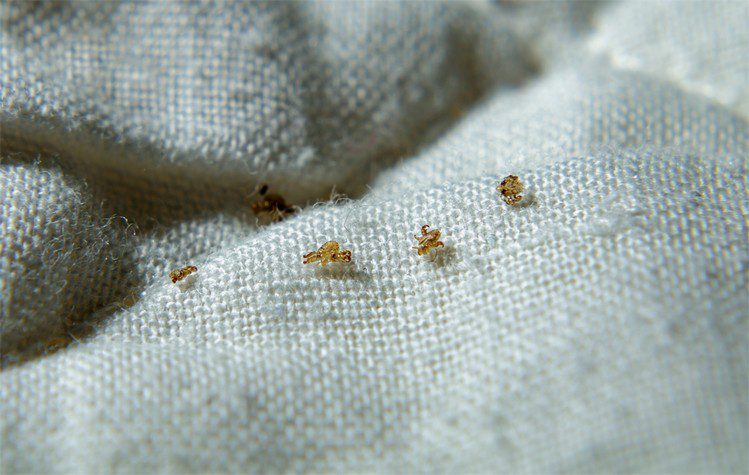
What are the Symptoms?
After contracting pubic lice, it can take several weeks for any symptoms to appear but they are the same for both men and women. Some of these symptoms may be more obvious at night because pubic lice are more active then. If you suspect you have pubic lice, you should experience the following symptoms:
Black Powder will be present in your underwear or against lighter coloured clothing if you aren’t wearing any. In the case of a significant infestation, this powder will be a lot more obvious as it is the lice’s faeces and will be left behind after feeding sessions.
Blood Spots that may appear as small blue or red spots on your pubic area, thighs, lower abdomen, or other parts of the body the pubic lice have spread to, which could include underarms, and areas of the face – such as beards, moustaches, and eyebrows and lashes.
Itching in the groin and other affected areas that can worsen at night when the lice are more active. The itching can also lead to inflammation and irritation on the skin that occurs due to scratching for prolonged periods.
The itching reaction is possibly the most uncomfortable when dealing with pubic lice and is caused by our bodies having an allergic reaction to the lice’s saliva and is our bodies way of alerting us to the intrusion.
Treatment Options for Pubic Lice
The treatment for pubic lice can be tricky. Typically, you will be provided with an insecticide cream, shampoo, or lotion designed to kill the lice and must be used at least twice with a 7 day gap between treatments. The second treatment is to kill any lice that hatched since the first and stop the infestation for good.
Anywhere on your body that has been afflicted with pubic lice should receive this treatment, not just the pubic area. This can include armpits, beards, and eyebrows as well as the hair that grows on your lower abdomen. Your GP will advise you on how to use the treatment, how long to leave it on for, and what to do if it’s not effective.
Unfortunately, pubic lice can build a resistance to some creams, lotions, and shampoos and alternative methods of removal may need to be explored. Pregnant or breastfeeding women and anyone under the age of eighteen will need a specific type of treatment.
Side effects of the treatment could include irritation to the skin, and discolouration of permed, coloured, or bleached hair. If the insecticide irritates your skin, wash it away immediately and contact your GP for other options. Towels, clothing, and bedding should be washed on a hot cycle to kill any lingering pubic lice.

Want more information about pubic lice? Get in touch with Broadgate today!
We understand that dealing with a possible infestation of pubic lice is a delicate issue and should be treated with care and respect. If you want more information, our team is on hand to help! We can provide advice on how to identify pubic lice and book you in to receive treatment so don’t wait, get in touch with us today!

