
Earlier this month (May 2022), health officials in Massachusetts and the CDC confirmed a single monkeypox case in a patient who had travelled to Canada, since then several cases have been reported in the UK. With the effects of the Covid-19 pandemic lingering, the announcement of a potential monkeypox outbreak has sent many people into a panic. In an attempt to ease your mind and give you all the information you could need, our dedicated team at Broadgate GP have come together to make this informative guide on everything you need to know about the latest health ‘crisis’.

What is Monkeypox?
You may not know that the first human case of monkeypox was in 1970 but was previously identified in 1958, where two outbreaks amongst monkeys were used both for research and for the virus’s name sake. The disease is believed to be a cousin of smallpox, an illness that was declared eradicated in 1980, and originated in animals – being most commonly found in tropical areas of West and Central Africa. Like smallpox, monkeypox belongs to a subset of the Poxviridae family of Orthopoxvirus,and this subset also includes cowpox.
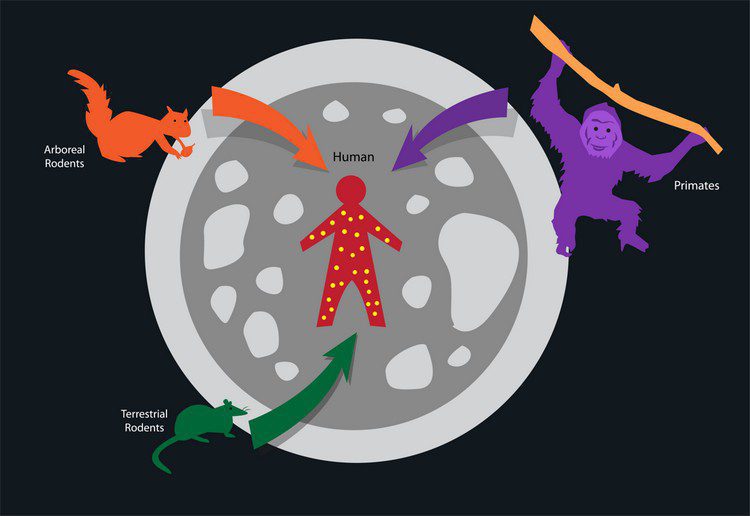
Many origins of the disease remain a mystery, however, with cases in humans so rare there hasn’t been a good enough volume of infected people to fully study the effects of the virus. For example, how the circulation of the virus is maintained in nature is unknown and the exact origin has not yet been determined, though animals such as dormice, Gambian pouched rats, several squirrel species, and non-human primates are highly susceptible to the effects of the illness.
It isn’t the first time the virus has been found in a patient outside of Africa – where the majority of infections are found. In 2003, there was an outbreak in Texas that was suspected to have been caused by a shipment of animals from Ghana, and cases were detected in July and November of 2021. Because of the virus’s close relationship with smallpox, the smallpox vaccine can provide some protection, though routine vaccinations for smallpox aren’t typically given anymore, therefore most monkeypox cases are currently affecting those who are unvaccinated.
What does the Monkeypox Rash Look Like?
The rash that’s associated with monkeypox is easily confused with the chickenpox rash. It starts as raised spots typically 1-5 days after the first symptoms and typically begins on the face before spreading to the rest of the body. These spots will develop into fluid filled blisters, which eventually form scabs that will fall off later. Symptoms usually clear up within a month but are expected to last at least 2 weeks after infection.
How is it Transmitted?
Monkeypox is spread via contact with infected wild animals – especially rodents – in parts of West and Central Africa. The infection is caught when coming into contact with blood, saliva, and other bodily fluids of an infected animal or human. It could also be possible to catch monkeypox by touching infected animal products, such as fur or skin, or eating the meat of an infected animal that hasn’t been properly cooked.
Coming into contact with bedding, clothing, or towels used by somebody who has a monkeypox rash, touching blisters or scabs or being near an infected person who coughs or sneezes who has the monkeypox rash is also a way the virus can spread from person to person.
What are the Symptoms?
The first symptoms of monkeypox appear anywhere between 5 and 21 days after infection to appear and, until the development of the monkeypox rash, can be easily confused with other illnesses, such as the cold or flu. Some of the symptoms of monkeypox include:
A High Temperature: In adults, a high temperature is usually considered as 38C or above, with a normal body temperature typically around 37C.
Fatigue and Exhaustion: Feeling tiredness or weakness, both mentally and physically, for extended periods could be an indication of exhaustion and fatigue.
Swollen Glands: These tender, painful lumps typically pop up under the chin, on each side of the neck, in the armpits, or around the groin.
Shivering: Similar to cold and flu symptoms, feeling unable to control your body shivering because of chills is another common first symptom of monkeypox.
Aches and Pains: Backache, muscle aches, and headaches can be uncomfortable but over the counter painkillers can provide some relief.
When to Contact Your GP
You should get in touch with your GP if you come into contact with somebody who has had monkeypox or monkeypox symptoms, or if you yourself begin to display symptoms. Additionally, you should visit your GP if you have travelled to Central or West Africa in the last 6 weeks. It’s essential you inform your GP of any contact you may have had with an infected individual or have travelled recently to areas of Africa before you make an appointment for any issue you may have.
Is there Treatment Available?
Treatment for monkeypox is more in place to relieve symptoms as there is no cure, but symptoms are typically mild and clear up within a month. Isolation is required for 21 days if you are diagnosed with monkeypox and in some cases you may need to stay in a specialist hospital to treat symptoms and prevent you from transmitting the infection.
Want more information? Get in touch with Broadgate GP today!
With all the current fear surrounding the effects monkeypox could have after recovering with the Covid-19 pandemic, it’s important to stay informed and up to date with medical advice. If you would like more information about the virus itself or ways to relieve symptoms, get in touch with our team at Broadgate GP today!

