
If you do not know your blood type, there are several ways you may be able to find it in the UK. You can check existing medical records, ask whether your GP already has a result, review your blood donation information, or have a specific blood group test.
Routine blood tests do not usually tell you whether you are A, B, AB or O, positive or negative. If your blood group has never been tested or recorded, a dedicated ABO and RhD blood group test is the most reliable way to confirm it.
The Main Facts
- Your blood group is not routinely checked as part of standard NHS blood tests.
- You may already have a result if you have been pregnant, received a transfusion or had certain hospital treatment.
- Your blood type is not usually available through the NHS App unless a relevant result is included within your accessible records.
- Blood donors can find out their blood type after donating through NHS Blood and Transplant.
- If you need a confirmed result and do not already have one, you can arrange a specific blood group test.
How Can You Find Out Your Blood Type in the UK?
The main ways to find out your blood type are to check whether it has already been recorded or to have it tested.
You could:
- Check previous hospital or maternity records
- Ask your GP whether a blood group result is on file
- Check your blood donation records if you have donated before
- Have an ABO and RhD blood group test
The terms blood type and blood group are commonly used to mean the same thing.
Your blood group combines your ABO group — A, B, AB or O — with your RhD status, which is positive or negative. This gives eight main blood types: A+, A-, B+, B-, AB+, AB-, O+ and O-.
Is Your Blood Type on Your NHS Records or NHS App?
Your blood group may be in your NHS medical records if it has previously been tested for a clinical reason, but it is not routinely recorded for everyone.
NHS Blood and Transplant advises that you cannot usually find your blood type simply from your NHS number or in the NHS App, so your NHS number alone will not help you find out my blood.
However, your blood group is more likely to have been recorded if you have:
- Been pregnant and had antenatal blood tests
- Received a blood transfusion
- Had surgery or treatment where blood grouping was required
- Had another medical reason for your blood type to be tested
If you think your blood type may have been checked previously, look through relevant hospital letters, test results or maternity records. You can also ask your GP surgery whether an existing result is visible in your medical record.
If no result is available, it does not necessarily mean you have never had your blood group tested. Older hospital results, for example, may not always be available alongside your current GP records.
Will Your GP Know Your Blood Type?
Your GP may have your blood group recorded, but GP practices do not routinely check everybody’s blood type.
A blood sample has to be specifically tested to determine your blood group. Having previously had blood tests at your GP surgery therefore does not necessarily mean your blood type will be known.
Your GP may be able to find a previous result if it was shared with the practice following pregnancy, hospital treatment, surgery or another relevant investigation.
If there is no existing result and there is no clinical reason for NHS testing, you may need to use another route if you simply want to find out your blood type.
Can Previous Blood Tests Tell You Your Blood Type?
Usually not. The fact that you have had blood taken before does not mean that your blood group was tested.
Different blood tests investigate different areas of your health. For example:
- A full blood count measures different types of blood cells, including red cells, platelets and white blood cells
- A lipid profile checks cholesterol
- Thyroid tests assess thyroid function
- Kidney and liver tests assess relevant markers of organ function
- Blood glucose or HbA1c tests assess blood sugar
Blood grouping is a separate test and needs to be specifically requested.
If you are reviewing previous results, look for terms such as blood group, ABO, RhD or ABO/RhD.
The NHS provides more information about common blood tests and what they are used to investigate.
Can You Find Out Your Blood Type by Donating Blood?
Yes. If you donate blood through NHS Blood and Transplant, your blood type is confirmed as part of the donation process when giving blood.
NHS Blood and Transplant states that you can find out your blood type after your first donation. Your result can then be shown through your donor information and NHS Give Blood App, and may also appear on a donor card where applicable.
You can find more information about donating blood and current eligibility requirements through NHS Blood and Transplant.
Blood donation should primarily be about helping patients rather than simply obtaining a blood type result. However, if you already donate or are interested in becoming a blood donor, learning your blood group is part of the process.
Can You Test Your Blood Type Privately?
Yes. If your blood type is not already recorded and you want a confirmed result, you can arrange a specific blood group test privately.
A blood group test checks your:
- ABO group: A, B, AB or O
- RhD status: positive or negative
This is different from booking a general health blood panel because blood grouping needs to be specifically included.
If you need to confirm your blood group rather than rely on old or incomplete records, Broadgate GP offers a private blood group testing service in London.
Broadgate GP also provides a wider range of private blood tests where other health markers or investigations need to be considered.
For medical situations such as blood transfusions, hospitals will still carry out the necessary blood-group and compatibility checks so patients can safely receive matched donor blood rather than relying solely on a result provided by the patient.
How Is Your Blood Type Tested?
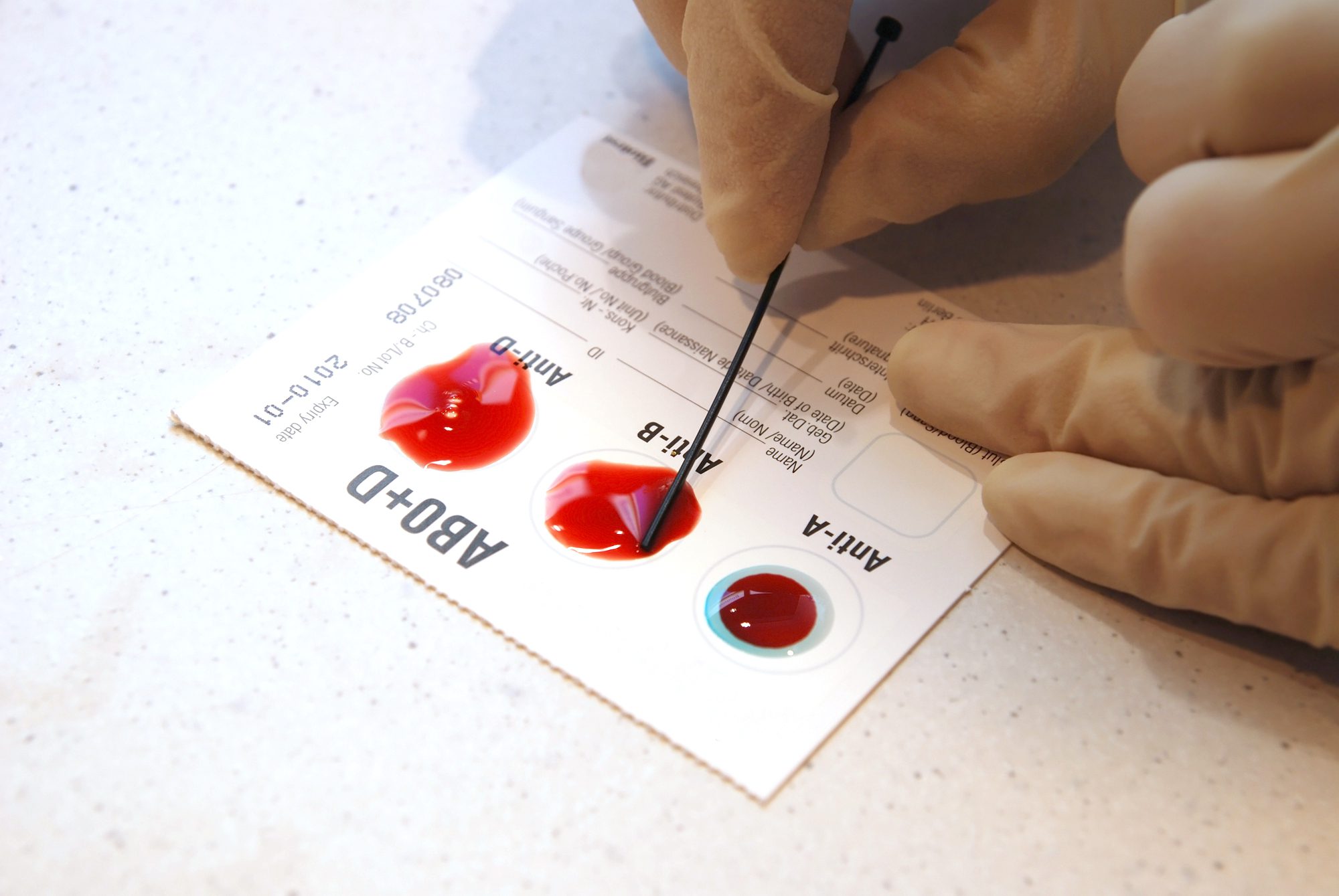
A blood group test uses a blood sample to identify particular markers on the surface of your red blood cells; these are proteins known as antigens.
In simple terms, the sample is tested against anti A and anti b antibodies to see how the red blood cells react. This establishes whether A antigens, B antigens, both or neither are present.
A further test identifies your RhD status through the rhd system, where the presence or absence of the rh d antigen determines the result.
The result combines the two systems, giving a blood group such as:
- O positive
- A negative
- B positive
- AB negative
The NHS guide to blood groups provides further information about the ABO and RhD systems.
What Do A, B, AB and O Blood Types Mean?
There are four main groups within the ABO blood group system:
- Group A: A antigens are present on the red blood cells
- Group B: B antigens are present
- Group AB: Both A and B antigens are present
- Group O: Neither A nor B antigens are present
Your blood also contains antibodies within the liquid called plasma, and depending on your ABO group these may include B antibodies or anti-B antibodies. The combination of antigens and antibodies is one reason correct blood-group matching is so important during blood transfusions.
According to the NHS, blood group O is the most common ABO group and the most common blood group in the UK, accounting for around 48% of the population.
You do not need to work out blood compatibility yourself. Hospitals carry out blood-group and compatibility testing whenever a transfusion is required, because the wrong ABO group can trigger an immune system attack and may be life-threatening if you receive blood that is not compatible.
What Does Positive or Negative Blood Type Mean?
The positive or negative part of your blood group refers to the presence of the RhD antigen.
If the RhD antigen is present, your blood type is RhD positive. If it is absent, you are RhD negative.
In the ABO system, blood groups are also described by RhD status.
- O+ means group O and RhD positive
- A- means group A and RhD negative
- AB+ means AB RhD positive
The NHS states that around 85% of the UK population has RhD positive blood.
RhD status is particularly important during pregnancy. Blood groups are routinely tested in pregnancy because an RhD-negative mother may produce antibodies if exposed to an RhD-positive baby’s blood.
Your maternity team will manage the necessary blood testing and advise you about any treatment required.
Why Might You Want to Know Your Blood Type?
Most people do not need to know their blood group for everyday healthcare. There are, however, several reasons why you may want to find out.
Pregnancy
Blood grouping forms part of antenatal care because ABO and RhD status can be important during pregnancy, as RhD incompatibility can affect the body and, without proper management, may in some cases become life-threatening.
Blood Donation
Knowing your blood type can help you understand more about your blood donation and why particular blood groups may be in demand.
Previous or Planned Medical Care
You may want to confirm a result following previous hospital treatment, surgery or transfusion-related testing, since knowing a patient’s blood type can matter in medical emergencies when urgent treatment or transfusion decisions are needed.
Personal Medical Information
Some people simply prefer to know their blood type and keep an accurate result within their personal medical information.
Even if you know your blood type, medical professionals will still carry out the checks needed before a transfusion or other procedure where accurate blood grouping is important.
Can You Work Out Your Blood Type From Your Parents?
Your parents’ blood groups can sometimes narrow down the blood groups you could have, but they cannot always tell you your exact blood type.
Blood groups are inherited through genes passed down from your parents.
For example:
- Two group O parents would normally have a group O child
- An AB parent and an O parent can have children with group A or B blood
- Parents with A and B blood groups can potentially have children with A, B, AB or O blood
Blood-group inheritance can therefore be interesting, but it should not be used as proof of your individual blood type.
If you need to know your own blood group with certainty, use a confirmed previous result or have it professionally tested.
Are Home Blood Type Tests Reliable?
Home blood typing kits are available, but they should not be treated in the same way as a professionally performed laboratory result when the information is needed for medical purposes.
Home kits generally use a finger-prick blood sample and require you to interpret how your blood reacts on a testing card.
Potential problems can include:
- Incorrect sample collection
- Difficulty interpreting the reaction
- An unclear or inconclusive result
A home blood test may be useful for personal interest, but it should not be relied upon for transfusion, pregnancy or other clinical decisions.
If your result is unclear, or you need definite confirmation, arrange appropriate professional testing.
When Should You Have Your Blood Type Professionally Tested?
You may want professional blood group testing if you need a clear, confirmed result and cannot find reliable information within your existing records.
For example, you may consider testing if:
- Your previous medical records do not show your blood group
- An old result is unclear or cannot be verified
- You want a reliable result for your personal records
- You have been asked for your blood type in connection with treatment or other medical care
If there is a clinical reason for knowing your blood group, speak to the healthcare team looking after you. They can arrange appropriate testing as part of your care where required.
If you simply want to find out your blood type outside an NHS clinical pathway, a dedicated blood group test can confirm your ABO and RhD result.
How to Find Out Your Blood Type: The Bottom Line
If you want to find out your blood type in the UK, start by checking whether a result already exists within your hospital, maternity, GP or blood donation records.
If you cannot find one, you will need a specific blood group test to confirm your ABO and RhD type. Routine blood tests do not normally include blood grouping automatically.
Where there is a clinical reason for testing, your healthcare team can advise you on what is required. If you simply want to confirm your blood group outside an NHS pathway, Broadgate GP’s private blood group testing service provides a dedicated option in London.
Frequently Asked Questions
How long does a blood type test take?
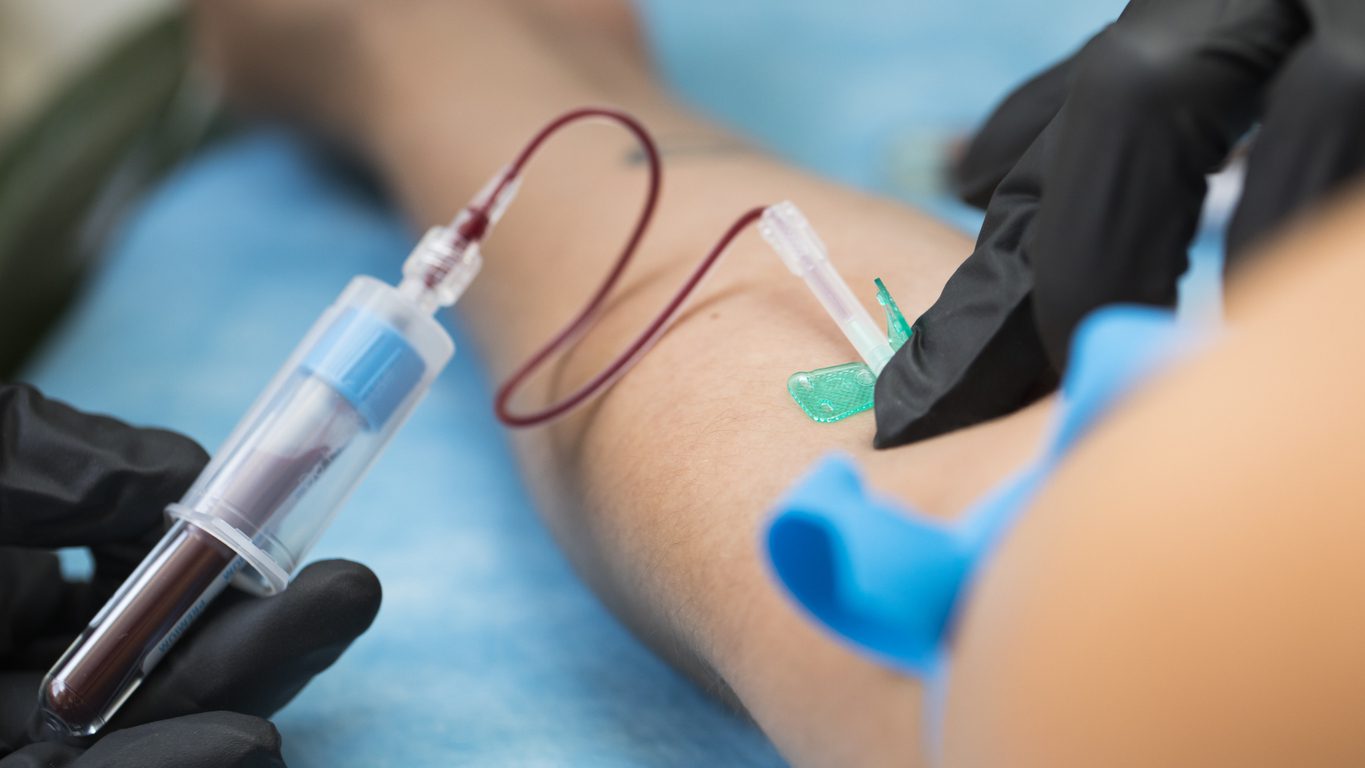
The blood sample only takes a few minutes to collect. Result times vary by clinic or laboratory, so check the expected turnaround when booking.
Is my blood type on my UK driving licence or passport?
No. UK driving licences and passports do not display your blood type. If you need a confirmed result, use medical records or a blood group test.
Does your blood type ever change?
For most people, blood type stays the same for life. Rare medical circumstances, such as some bone marrow or stem cell transplants, can affect blood-group results.
Can children have their blood type tested?
Yes. Children can have their blood type tested when medically necessary. For non-medical testing, speak to a healthcare professional first.
Do hospitals trust the blood type you tell them?
No. Hospitals will test and confirm your blood group before a transfusion rather than relying only on what you tell them or previous records.
Can a routine blood test tell me my blood type?
Usually not. Tests such as a full blood count, cholesterol test or liver function test do not normally include blood grouping unless it has been specifically requested.
Can I find my blood type on the NHS App?
Not usually. Your blood group may appear if a previous result is available in your accessible medical records, but it is not routinely displayed for everyone.
Can I find out my blood type by donating blood?
Yes. NHS Blood and Transplant determines your blood group when you donate, and your blood type can be viewed after your first successful donation.

