
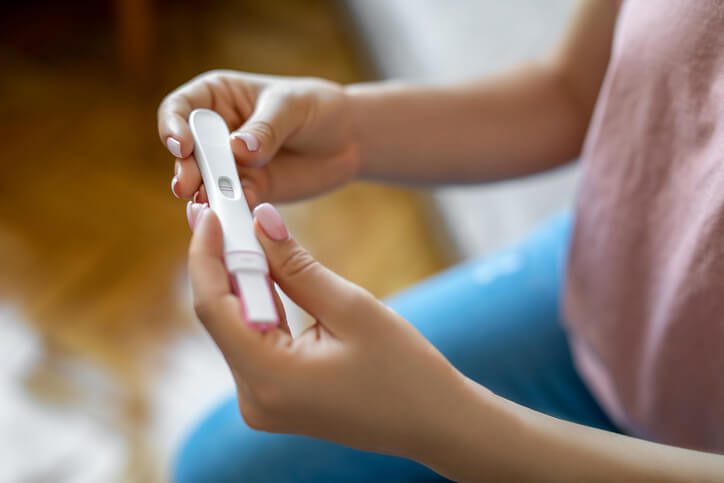
A positive pregnancy test can bring a myriad of feelings: relief, excitement or even shock. If the result does not match your expectations, your first thought may be: can you get a false positive pregnancy test?
The short and simple answer is yes, but it is rare. Most home pregnancy tests are reliable and accurate when used correctly. Even so, there are a few situations where a pregnancy test may show a positive result when you are not currently pregnant.
The NHS states that home pregnancy tests are accurate if you follow the instructions, and that a positive result is almost certainly correct. A negative result is more likely to be wrong, particularly when someone tests too early.
This guide explains what a false positive pregnancy test means, the chances of a false positive on a pregnancy test, what can cause a false result, and what to do next if your result feels confusing. If you want a clear answer after a home test, Broadgate GP offers same-day private pregnancy blood tests to give you greater clarity.
The Quick Answers
- False positive pregnancy tests are possible, but uncommon.
- A positive result normally means that the test has detected human chorionic gonadotrophin (hCG).
- Recent pregnancy loss, hCG-containing fertility medicine and a small number of medical conditions can explain an unexpected positive result.
- A chemical or ectopic pregnancy can produce a positive test because hCG is genuinely present; these are not simply faulty test results.
- Repeat an unexpected result correctly and arrange medical advice if results conflict or you have concerning symptoms.
What Does a False Positive Pregnancy Test Result Actually Mean?
A false positive test result means a test says you are pregnant when you are not. Home pregnancy tests work by looking for human chorionic gonadotrophin, more commonly referred to as hCG or the pregnancy hormone, and they detect hCG in urine. This hormone starts to be produced around six days after fertilisation occurs. If hCG levels are high enough for the test to detect, there will be a positive test result.
In many cases, a positive result is not a random mistake. The test has detected hCG for a biological reason, but this does not always mean there is an ongoing pregnancy. False positives caused solely by a correctly used test being wrong are rare.
So, if you are worrying about false positives on a pregnancy test, it helps to stay calm and keep the following points in mind:
- A positive result is usually correct.
- A false positive can happen, but it is unlikely.
- A faint line read within the test’s stated time window can still be a positive result.
- If the result feels out of place, check with a healthcare professional.
If you are searching for the chances of a false positive pregnancy test, the honest answer is that it is possible but very unlikely. There is normally an underlying explanation rather than the test getting it wrong for no reason.
What Can Cause a False Positive Result on a Pregnancy Test?
The main causes are specific and some are uncommon. It is important to distinguish a genuine false positive from a positive test caused by a pregnancy that has recently ended or is not developing normally.
Fertility Medicine Containing hCG
A fertility medication such as an hCG trigger injection used during treatment to stimulate ovulation can remain in the body for several days and cause a positive result if the test is taken too soon.
hCG-containing fertility treatments are the main medication-related consideration. Most medicines do not usually affect the result, and birth control pills do not usually make a home pregnancy test positive. If you are having fertility treatment, follow the clinic’s instructions about when to test.
Recent Miscarriage or Early Pregnancy Loss
You may continue to test positive following a very early pregnancy loss, sometimes called a chemical pregnancy. A chemical pregnancy occurs before a pregnancy can usually be seen on an ultrasound scan. Chemical pregnancies account for 25-40% of undetected miscarriages. The test was detecting genuinely elevated hCG, so this is more accurately described as an early pregnancy that did not continue, often because implantation in the uterine lining did not progress, rather than a faulty result.
After a pregnancy ends, hCG can remain in the blood and urine for several weeks. How quickly it falls varies. Some NHS services advise taking a follow-up test around three weeks after a pregnancy loss and contacting the healthcare team if it remains positive.
Recent Abortion
A recent abortion can also result in a positive pregnancy test because hCG does not disappear immediately. Follow the aftercare and testing instructions provided by the clinic.
If the test remains positive at the point you were told to retest, or you have ongoing pain, heavy bleeding, a temperature or feel unwell, contact the provider or seek medical advice.
Ectopic Pregnancy
An ectopic pregnancy occurs when a fertilised egg implants outside the womb, usually in a fallopian tube. It can produce a positive pregnancy test because pregnancy tissue can still produce hCG. This means the test is not technically false, but it cannot show where the pregnancy is located or whether it is progressing normally.
Ectopic pregnancy requires urgent assessment. Seek medical advice if you have a positive test alongside one-sided lower abdominal pain, unusual vaginal bleeding, shoulder-tip pain, dizziness or fainting. Severe pain or collapse requires emergency help.
Ovarian Problems or Menopause
Ovarian problems, including ovarian cysts, and hormonal changes around menopause have occasionally been associated with unexpected hCG results. These are uncommon and should not be self-diagnosed. A clinician can investigate repeated positive results when pregnancy does not seem possible.
When asking what can cause a false positive pregnancy test, the answer is usually not something random. It tends to involve detectable hCG, the way the test was used or interpreted, or a rare clinical reason.
Rare Medical Conditions
Rare conditions, including gestational trophoblastic disease and a small number of tumours, can raise hCG or interfere with testing. An unexpected result does not mean you have a serious illness, but persistent unexplained positives should be assessed by a healthcare professional.
Evaporation Line vs a False Positive Pregnancy Test
An evaporation line is not the same as a genuine positive. It can appear as urine dries on some non-digital tests, particularly when the test is checked after the permitted reading window. It may look colourless, grey or unusually thin.
Interpret the test only at the time stated in the test instructions. A faint line appearing within that window may still be positive. If it appears later, use a new, in-date test rather than interpreting the same test again.
Can an Expired Pregnancy Test Give a False Positive?
An expired or incorrectly stored test is not reliable. Deterioration is more commonly associated with an invalid or false negative result than a false positive. Repeat any unexpected result using a new test.
Check the expiry date, packaging and storage instructions before testing.
Can Clearblue Give You a False Positive Result?
The same rule applies to Clearblue as to other brands: a false positive is possible but improbable. Timing, the presence of hCG and correct use matter more than the brand name.
Always:
- Check the expiry date on the home pregnancy test kit.
- Read the result within the timeframe stated on the box.
- Make sure the control indicator shows that the test worked.
- Repeat the test if the result does not seem to fit.
- Speak to a healthcare professional if you are unsure.
Can Digital Pregnancy Tests Give a False Positive?
Yes, you can still receive a false positive result from a digital pregnancy test. These tests work by looking for the hCG hormone, so the underlying process is similar to other home pregnancy tests.
A digital result may feel more certain because it displays words. However, it cannot distinguish an ongoing pregnancy from residual hCG, fertility medicine or an ectopic pregnancy. Confirm an unclear result with a fresh test or healthcare professional rather than online photographs.
Can You Get a False Positive Pregnancy Test on Your Period?
A period itself does not cause a pregnancy test to turn positive. If you are wondering whether you can get a false positive on your period, it is worth considering whether the bleeding is your normal period or something else. Bleeding can occur in early pregnancy, after a chemical pregnancy or for reasons unrelated to pregnancy.
Obtain medical advice for a positive result with bleeding, particularly if it is heavy or accompanied by pain, shoulder-tip pain, dizziness or fainting.
Can Using Too Much Urine Affect the Result?
Using too much urine, or not holding the stick correctly in the urine stream, is more likely to make the test invalid than positive. If it floods the testing area, the control indicator may not appear or the display may be unclear.
If the test looked flooded, use a fresh one and follow its directions exactly. Drinking a large amount immediately beforehand can dilute urine and is more likely to contribute to a false negative.
Can Sperm Cause a False Positive Pregnancy Test?
No. Sperm cannot cause a false positive pregnancy test. Pregnancy tests react to hCG, which is not present in sperm or semen. Sexual activity shortly before taking a urine pregnancy test does not make it positive.
Can You Get a False Negative Pregnancy Test Result?
Yes. A negative result is less reliable than a positive one. A false negative can happen if you test too soon, make a user error by not following the instructions, use diluted urine when hCG is low, or use an expired test.
If you receive a negative test result but still believe you may be pregnant, wait at least one week after a missed period before testing again to improve accuracy. If you do not know when your next period is due, NHS guidance advises testing at least 21 days after the last time you had unprotected sex.
Speak to a GP if a second test is negative but your period has still not arrived.
What Should You Do After an Unexpected Positive Pregnancy Test?
If a pregnancy test is positive but you do not believe you are pregnant, take the following steps:
- Check the test. Confirm that it was in date, the control indicator appeared and you read it within the stated timeframe.
- Repeat it correctly. Use a new test and follow the instructions exactly. If you are testing very early, first-morning urine may contain a more concentrated level of hCG.
- Consider recent circumstances. Recent pregnancy loss, abortion, birth or fertility treatment can affect the result.
- Do not ignore symptoms. Pain, bleeding, shoulder-tip pain, dizziness or fainting can require urgent assessment.
- Arrange clinical confirmation. A clinician may recommend a urine test, a quantitative hCG blood test, repeat blood testing or an ultrasound depending on your result, symptoms and medical history.
A blood test can measure the amount of hCG. Clinicians may repeat it after approximately 48 hours to assess how the level changes. A single result cannot always confirm where a pregnancy is located, so further testing may be needed.
When Should You Seek Medical Advice?
Speak to a clinician promptly about an unexpected positive, repeated mixed results or a positive test following recent pregnancy loss or fertility treatment.
Seek urgent medical advice if you have:
- A positive result with heavy or unusual bleeding.
- Severe or one-sided lower abdominal pain.
- Shoulder-tip pain.
- Dizziness, fainting or collapse.
If you are having mixed home pregnancy test results and are unsure what to trust, speak to a clinician to organise a pregnancy blood test in London for greater clarity. Broadgate GP offers same-day appointments and pregnancy blood testing from its Central London clinic.
FAQs
How Common Is a False Positive Pregnancy Test?
False positives are uncommon. When a home test is in date, used correctly and read on time, a positive result is usually accurate. Unexpected results are more often connected to detectable hCG, pregnancy loss, fertility treatment or misreading the test.
Why Is My Pregnancy Test Positive When I Am Not Pregnant?
Possible explanations include early pregnancy loss, residual hCG, hCG-containing fertility medicine or, rarely, a medical condition. A line read too late could be an evaporation line. Repeat the test and seek advice if it remains unexplained.
Can a Chemical Pregnancy Cause a False Positive Test?
A chemical pregnancy can cause a positive followed by a negative result. The first test detected hCG from a genuine early pregnancy, so it was not technically false. The pregnancy ended before it could usually be seen on an ultrasound.
How Long Can a Pregnancy Test Stay Positive After a Miscarriage?
hCG can remain detectable for several weeks after a miscarriage. Follow your healthcare team’s instructions. Some NHS services recommend a home test around three weeks after pregnancy loss and further assessment if it remains positive.
Can Antibiotics or the Contraceptive Pill Cause a False Positive Pregnancy Test?
Antibiotics and the contraceptive pill do not usually cause a false positive pregnancy test. Medicines containing hCG, particularly some fertility treatments, are the main medication-related cause. If you are unsure about a medicine, check its patient information or speak to the prescribing clinician.

