
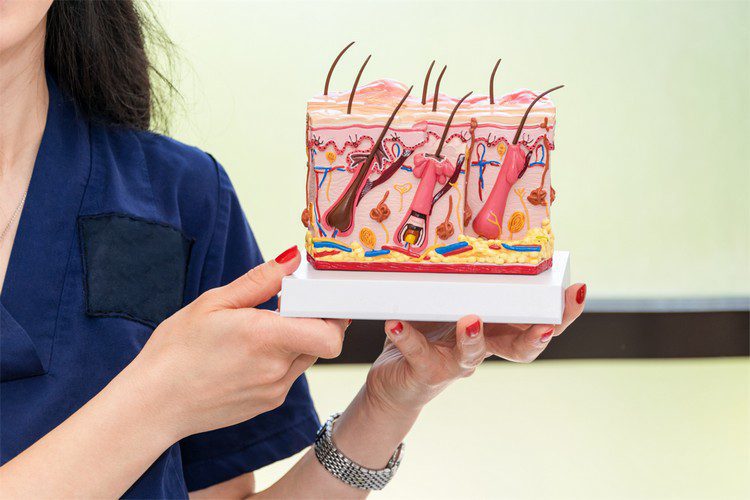
If you visit a trichologist, you are visiting a specialist who has intensively studied trichology and can deal with any and all issues you may have with your hair and scalp. While trichologists are not medical doctors, they undergo extensive training to advise people who are having hair related problems or issues with their scalp. Whether it’s dealing with hair loss, oily scalps, scalp psoriasis, hair breakage, alopecia, or trichotillomania, trichologists can examine the hair and scalp and recommend a treatment plan for you. Here at Broadgate GP, our trichologists are skilled and reliable and have worked hard to put together this informative guide on all the things a trichologist can do for you!

When Should You See a Trichologist?
No matter your age, race, or gender identity, at some point, everyone could experience problems related to their hair and scalp. Noticing balding patches or thinning hair? A trichologist can help identify the root of your problem and recommend ways you can manage your condition yourself, or refer you to a medical doctor to receive medical treatment or prescription medications.
You should go and see a trichologist if you start to notice problems with your hair or scalp. This can include thinning patches or hair loss, scalp flakes that don’t improve with anti-dandruff treatments, or irritation and soreness. Both men and women can suffer from these conditions, which is why men’s health and women’s health are an important part of life that needs careful consideration.
What do Trichologists Treat?
Trichologists treat a variety of conditions relating to hair and scalp issues and will perform a thorough examination before offering a diagnosis – occasionally going as far as to request a blood test from your usual GP to help with diagnosing the problem and providing treatment options. Trichology can be used to treat conditions such as:
Scalp Psoriasis
Typically beginning on the scalp and elbows, psoriasis is more likely to appear on your skin if it runs in your family and will appear between the ages of 10-30. The affected areas will be covered with dry white scales that can be easily confused with dandruff as they cause itchiness and the scales will fall off in flakes when scratched. Psoriasis can be differentiated from dandruff as the skin on the scalp will be darker or redder in the afflicted areas and won’t be affected by traditional dandruff treatments, such as shampoo and conditioner available in high-street stores.
Ringworm
Coming into contact with an animal or person who has ringworm – a superficial fungal infection – will cause the infection to spread to your skin. It can present itself as dry red patches with a lighter centre. While these patches won’t leave behind scars, it can cause patchy hair loss in the affected area that can show broken hair follicles. Any hair that grows out while treating ringworm can begin to grow at different angles to your typical growth pattern, leaving behind swirl-like patterns in your hair. If you have ringworm on your scalp, it may feel tender and sore to the touch.
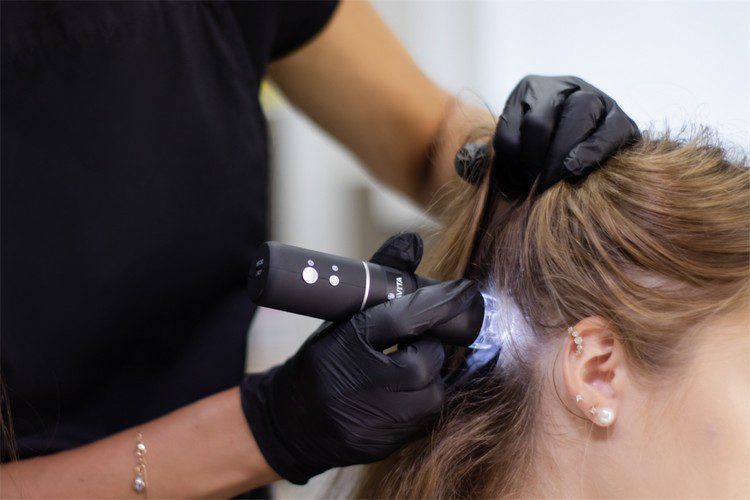
Alopecia
There are a few different types of alopecia and different causes for each type. Male or female pattern hair loss is the most common type of alopecia. Men are more likely to have their hairline recede or suffer total or partial baldness due to this while women may notice a widening of their part. There can be many things that contribute to alopecia, including hormones, familial history, and changes to the current environment. Stress can also be a major contributing factor to alopecia, which can cause more stress and more hair loss. A trichologist can help identify the cause of alopecia and recommend treatment options.
Hair Texture
Excessive use of heat, chemicals, and dyes can cause lasting damage to the hair follicle that can change the way your hair feels, looks, and behaves. Many people choose to just cut these afflicted areas off and try and keep the condition of the remaining hair good during regrowth, but there are ways to restore your damaged locks back to their former glory without having to remove a large portion of the hair. In instances like this, your trichologist will work closely with your hairdresser to decide on a plan to keep your hair healthy and – by extension – leave it feeling and looking great.
Additional Treatments
When appropriate, a trichologist may provide advice and guidance around a variety of treatments that they may not necessarily be able to perform themselves, but are informed of the process and what it means for the patient. This can include hair transplant services, medicines to promote hair growth after chemo, and arranging biopsies to get a bigger picture of your hair or scalp problem.

Want to know more? Get in touch with our team at Broadgate GP today!
Here at Broadgate GP, we provide a huge range of medical services and work closely with one of the top trichologists and skin specialists in London. We’re on hand to offer advice and guidance and arrange appointments to nip your hair and scalp problems in the bud. Get in touch with our friendly team today!

